
 ALHAMD MOTORS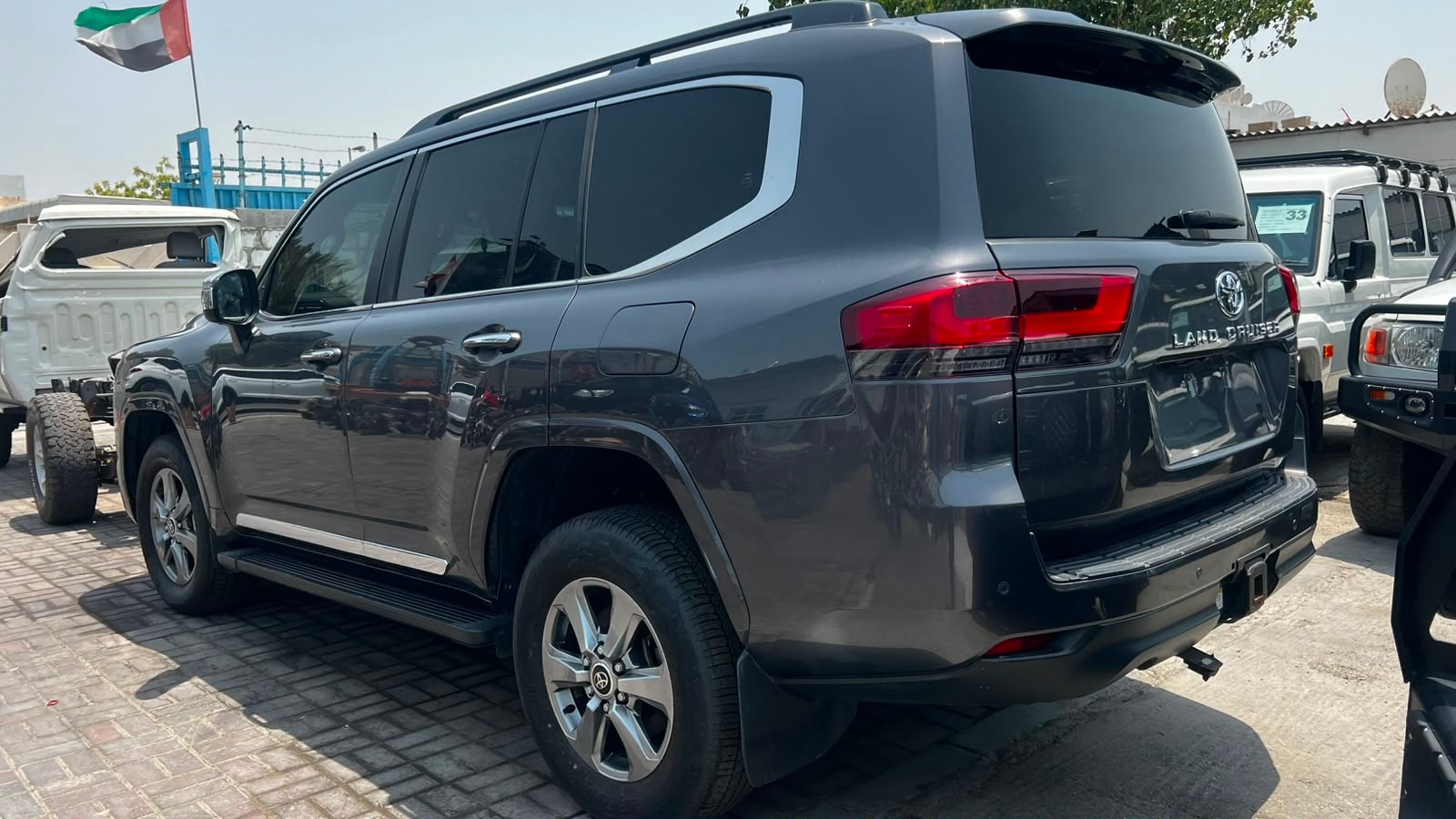
When buying a vehicle for African roads, many people focus on the engine, fuel economy, mileage, brand, and purchase price. These are all important considerations, but one specification that is sometimes overlooked can have a major effect on everyday driving: ground clearance.
Ground clearance is the distance between the lowest point underneath a vehicle and the ground. While this number may look like a simple specification on a vehicle sheet, it can make a significant difference when a car is regularly driven over potholes, gravel roads, uneven surfaces, speed bumps, muddy tracks, rocky terrain, or damaged roads.
For African buyers sourcing vehicles from Dubai, understanding ground clearance is particularly important because road conditions can vary dramatically between cities, highways, rural communities, construction areas, and remote regions. A vehicle that performs perfectly on smooth urban roads may not necessarily be the best choice for roads with deep potholes or uneven surfaces.
At Al Hamd Motors, vehicle selection is approached with the buyer’s intended market and driving requirements in mind. The company has more than 21 years of experience in global vehicle trading and specializes in exporting new and used right-hand-drive vehicles from the UAE to African and other international markets.
What Is Vehicle Ground Clearance?
Ground clearance refers to the vertical space between the road surface and the lowest part of a vehicle’s underbody.
Depending on the vehicle, the lowest point may be around the exhaust system, suspension components, differential, engine protection area, or another component underneath the chassis.
A vehicle with greater ground clearance generally has more space between its underside and the road. This can reduce the likelihood of the underbody striking the ground when driving over obstacles.
However, ground clearance should not be viewed in isolation. A vehicle’s suspension design, wheel and tire combination, wheelbase, approach angle, departure angle, and overall construction also influence how effectively it handles uneven terrain.
That is why simply choosing a vehicle with the highest clearance figure is not always the best approach. The right vehicle should be selected according to the actual roads and conditions where it will be used.
Why Ground Clearance Matters in African Markets
Africa contains an enormous variety of driving environments.
Major cities may have modern paved highways and well-maintained streets, while some rural areas can have unpaved roads, deep potholes, loose gravel, sand, mud, steep approaches, and uneven surfaces.
A vehicle with limited clearance can be more vulnerable when regularly exposed to these conditions.
Higher ground clearance can provide additional underbody space when passing over:
- Deep potholes
- Uneven road surfaces
- Gravel roads
- Large speed bumps
- Raised road edges
- Rocky sections
- Muddy tracks
- Rough construction routes
- Uneven rural roads
This does not mean that every African buyer needs a large SUV or 4×4. Urban drivers may have completely different requirements from agricultural operators, construction companies, tourism businesses, or customers who regularly travel between cities and rural communities.
The important point is to match the vehicle to the road environment.
Ground Clearance and Potholes
Potholes are one of the clearest examples of why underbody clearance matters.
A shallow pothole may present little difficulty for most vehicles. A deep or irregular pothole, however, can create a much greater challenge, particularly when approached at the wrong speed or angle.
When the wheel drops into a pothole, the suspension moves through its available travel. If the road surface is severe enough, components underneath the vehicle can potentially come closer to the ground.
A vehicle with appropriate ground clearance provides additional physical space between the road and its underside.
This is especially useful for buyers who regularly travel on roads where potholes are difficult to avoid.
However, clearance does not make a vehicle immune to pothole damage. Drivers still need to reduce speed and drive carefully because tires, wheels, suspension components, steering parts, and other systems can be affected by severe impacts.
Rough Roads and Unpaved Surfaces
Not every African road is paved.
Unpaved roads may consist of compacted dirt, loose gravel, stones, sand, or a combination of different surfaces. Conditions can also change significantly during rainy and dry seasons.
On rough surfaces, a vehicle may experience much greater movement through its suspension compared with smooth city roads.
Adequate ground clearance can help reduce the risk of the vehicle’s underside contacting raised sections of the road.
For buyers in areas where unpaved roads are common, this should be one of the specifications considered before purchasing a vehicle from Dubai.
Ground Clearance Is Important for SUVs and Pickups
SUVs and pickup trucks are often selected for African markets because they can combine passenger capacity, load-carrying ability, and versatility.
Many SUVs and pickups are designed with greater ground clearance than ordinary passenger sedans.
This can make them practical for customers who regularly encounter uneven roads.
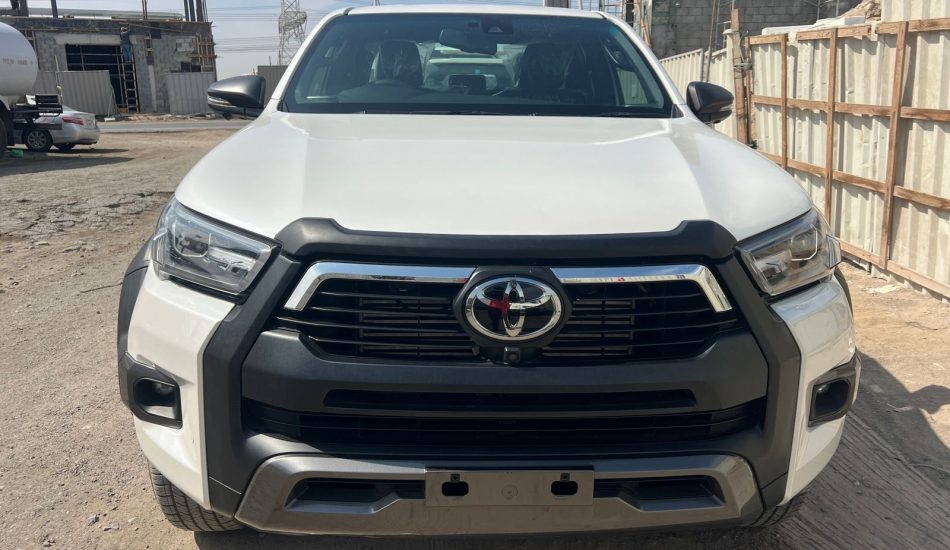
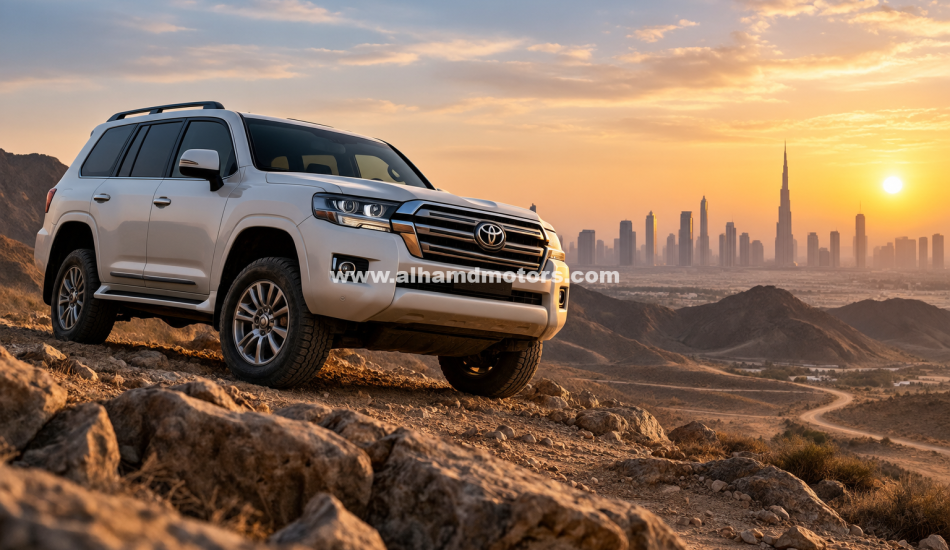
Vehicles such as the Toyota Land Cruiser, Toyota Hilux, Nissan Patrol, Ford Ranger, and similar models can be considered when the intended application requires additional clearance and road capability.
However, the correct choice depends on the specific vehicle specification, model year, drivetrain, tire setup, intended load, and destination market.
Rather than selecting a model solely because it is classified as an SUV or pickup, buyers should evaluate the complete vehicle specification.
Does More Ground Clearance Always Mean a Better Car?
No.
This is an important point for anyone buying a vehicle from Dubai for export to Africa.
Greater ground clearance can be useful in rough-road environments, but it can also affect other characteristics of a vehicle.
For example, a vehicle designed primarily for urban driving may prioritize:
- Ride comfort
- Fuel efficiency
- Easy parking
- Lower center of gravity
- Road handling
- Passenger comfort
A vehicle designed for difficult terrain may instead prioritize:
- Ground clearance
- Suspension travel
- Tire durability
- Approach and departure angles
- Four-wheel-drive capability
- Chassis strength
Therefore, buyers should not assume that the vehicle with the greatest clearance is automatically the best investment.
The best vehicle is the one that provides the right balance between capability, comfort, operating costs, reliability, and the conditions in which it will be driven.
Ground Clearance vs Suspension Travel
Ground clearance and suspension travel are related but different concepts.
Ground clearance describes the physical space beneath the vehicle when it is in its normal position.
Suspension travel refers to how far the wheels and suspension can move in response to changes in the road surface.
A vehicle can have good ground clearance but still require careful driving on severe terrain. Likewise, a capable suspension system can help keep the wheels in contact with uneven surfaces while maintaining vehicle stability.
For African buyers, understanding both characteristics can provide a more accurate picture of a vehicle’s suitability for rough roads.
Why Tire Size Also Matters
Tires are another important part of the equation.
Larger-diameter tires can affect the vehicle’s overall ride height and approach to uneven terrain, depending on the original vehicle design and approved specifications.
Tire sidewall height can also influence how a vehicle responds to potholes and rough surfaces.
However, changing tire dimensions without considering manufacturer specifications can affect handling, braking, speedometer accuracy, suspension geometry, and other vehicle characteristics.
For this reason, buyers should avoid assuming that installing larger tires is an easy solution to inadequate ground clearance.
The safest approach is to select a vehicle whose factory specification already suits the intended road environment.
Approach Angle and Departure Angle
Ground clearance is only one part of a vehicle’s off-road geometry.
Two other important measurements are the approach angle and departure angle.
The approach angle indicates how steep an obstacle can be before the front underside of the vehicle makes contact.
The departure angle performs a similar function at the rear.
These measurements can become particularly relevant when driving across steep changes in road elevation, ditches, embankments, or rough tracks.
A vehicle may have reasonable ground clearance but still struggle with a steep obstacle if its front or rear bodywork reaches the ground before the tires can climb over it.
For customers purchasing vehicles for challenging African environments, these characteristics are worth considering alongside ground clearance.
Why Vehicle Wheelbase Matters
Wheelbase can also influence how a vehicle behaves on uneven roads.
A vehicle with a longer wheelbase can provide a stable and comfortable ride, but depending on the terrain, its underbody may have a greater chance of contacting the crest of a sharply uneven surface.
A shorter-wheelbase vehicle may have an advantage in certain tight or uneven environments.
Again, there is no universal winner.
The ideal configuration depends on whether the vehicle will mainly be used in cities, on highways, in rural areas, on construction sites, or across a combination of environments.
Ground Clearance for Different African Driving Environments
Urban African Driving
Drivers who spend most of their time in major cities may not require an extreme off-road vehicle.
A practical SUV, crossover, or pickup with adequate clearance can provide a useful balance between city comfort and protection from potholes and speed bumps.
Rural Roads
Rural driving may require additional consideration because road surfaces can change frequently.
A vehicle with suitable clearance, durable suspension, appropriate tires, and good mechanical reliability can be more practical for regular rural travel.
Construction and Industrial Areas
Construction sites can expose vehicles to loose stones, dirt, uneven ground, mud, and temporary access roads.
For businesses operating in these environments, vehicle selection should consider not only clearance but also payload capacity, suspension durability, drivetrain, and ease of maintenance.
Agricultural Areas
Agricultural operations can involve muddy tracks, unpaved roads, fields, and uneven terrain.
A suitable pickup or SUV can be useful where ordinary passenger vehicles may struggle.
Long-Distance Intercity Travel
Long-distance drivers may encounter a combination of highways, urban roads, rural roads, and rough sections.
In this situation, buyers often need a vehicle that balances highway comfort with enough clearance and durability for less predictable road conditions.
Ground Clearance and Vehicle Loads
Another factor buyers should consider is vehicle load.
A vehicle’s ride height can change when carrying heavy passengers, equipment, cargo, or other loads.
For commercial buyers, this is particularly important.
A pickup that regularly carries heavy equipment may sit lower under load than it does when empty. Similarly, a passenger vehicle carrying a full complement of occupants can experience additional suspension compression.
This is why businesses should evaluate vehicles according to their real operating conditions, rather than looking only at an unloaded vehicle specification.
Why African Buyers Should Consider Ground Clearance Before Importing from Dubai
Buying a vehicle from Dubai provides access to a wide international inventory, but the vehicle’s original market specification does not automatically guarantee that it is ideal for every African destination.
Before completing a purchase, buyers should ask:
- What type of roads will the vehicle regularly use?
- Is the vehicle primarily for city or rural driving?
- Will it carry heavy loads?
- Are potholes common on the intended routes?
- Will the vehicle encounter sand, mud, gravel, or rocky roads?
- Is four-wheel drive necessary?
- Are replacement tires and suspension parts readily available?
- Does the vehicle’s steering configuration comply with the destination country’s requirements?
- What are the local import regulations?
- What will the total ownership cost be after import?
These questions can help buyers avoid choosing a vehicle based only on appearance or purchase price.
Ground Clearance and Long-Term Maintenance
Choosing a vehicle suited to local roads can contribute to better long-term ownership.
When a vehicle is repeatedly used outside its intended environment, components such as suspension parts, tires, wheels, steering components, and underbody systems may experience additional stress.
That does not mean a high-clearance vehicle will never require repairs. Maintenance remains essential regardless of vehicle type.
Regular inspection of:
- Tires
- Suspension components
- Shock absorbers
- Steering components
- Brakes
- Underbody protection
- Wheel alignment
can help identify problems before they become more expensive.
For commercial fleets, preventative maintenance can be especially important because vehicle downtime can directly affect business operations.
How to Choose the Right Vehicle from Dubai for Africa
The first step should be identifying the destination and intended use.
A buyer in Nairobi may have different requirements from a buyer operating in a rural area of Zambia. A construction company in Ghana may need a different vehicle from a family traveling mainly on paved roads in South Africa.
Once the use case is established, buyers can compare:
1. Ground Clearance
Determine whether the vehicle provides sufficient clearance for the roads where it will operate.
2. Suspension Design
Consider the vehicle’s suspension setup and suitability for the intended workload.
3. Drivetrain
For demanding environments, buyers may need to consider two-wheel drive versus four-wheel drive.
4. Tire Specification
Check tire size, condition, availability, and suitability for the destination environment.
5. Payload Capacity
Commercial buyers should make sure the vehicle can safely handle its expected load.
6. Spare Parts
A vehicle with accessible replacement parts can be easier and less expensive to maintain.
7. Fuel Type
Consider fuel availability and operating costs in the destination country.
8. Resale Demand
Popular models can potentially offer stronger resale opportunities, particularly for dealers and fleet operators.
9. Vehicle Condition
For used vehicles, inspect the engine, transmission, suspension, chassis, body, tires, electronics, and service history before purchase.
10. Export and Import Requirements
Confirm that the vehicle specification and documentation meet the requirements of the destination country before shipping.
Why Buying from an Experienced Dubai Exporter Matters
Selecting a vehicle for export is different from buying a car simply for local use.
An experienced exporter can help international buyers understand vehicle specifications, availability, documentation, shipping arrangements, and destination requirements.
Al Hamd Motors is a UAE-based global car trading company with more than 21 years of experience. The company specializes in new and used right-hand-drive vehicle exports and works with buyers across markets including Kenya, Uganda, Tanzania, Zambia, Zimbabwe, Ghana, Nigeria, South Africa, and other international destinations.
The company’s services include vehicle sourcing, quality control, export documentation support, logistics coordination, and international vehicle trading. Its website states that vehicles are inspected through quality-control processes before export.
This experience can be valuable for African buyers who need more than simply a vehicle listing. Understanding the customer’s road conditions and intended application can help create a more suitable purchasing decision.
Questions to Ask Before Buying a High-Clearance Vehicle
Before confirming a vehicle from Dubai, African buyers should ask the exporter for detailed information about:
- Exact model and year
- Engine specification
- Transmission
- Drive configuration
- Ground clearance
- Tire size
- Vehicle mileage
- Service history
- Suspension condition
- Chassis condition
- Vehicle inspection information
- Steering configuration
- Export documentation
- Shipping arrangements
- Destination-country requirements
Getting these details before payment and shipment can reduce uncertainty and help the buyer make an informed decision.
Common Mistakes to Avoid
Choosing Only by Price
A cheap vehicle is not necessarily the cheapest vehicle to own.
A model with poor suitability for local roads may create higher maintenance costs over time.
Assuming Every SUV Is Suitable for Rough Roads
SUV classification does not automatically mean a vehicle is designed for severe off-road conditions.
Always check the actual specifications.
Ignoring Vehicle Load
A commercial vehicle should be evaluated based on its expected working load, not simply how it performs when empty.
Focusing Only on Ground Clearance
Clearance matters, but so do suspension, tires, drivetrain, chassis construction, and vehicle geometry.
Forgetting Local Regulations
Different African countries have different rules regarding imported vehicles, including steering configuration, vehicle age, inspection, taxation, and registration.
These requirements should be confirmed before shipping.
The Dubai Advantage for African Vehicle Buyers
Dubai provides African buyers with access to a large and diverse vehicle market. The region’s established automotive trade and export infrastructure make it possible to compare vehicles based on specifications, condition, price, and intended application.
For buyers who understand their road requirements, this variety can be a major advantage.
Instead of purchasing whatever vehicle happens to be available, an importer can search for a vehicle that specifically matches the conditions of the destination market.
That approach is particularly valuable when ground clearance and road capability are important priorities.
Final Thoughts
Ground clearance is more than just another number on a vehicle specification sheet. For African buyers, it can be an important part of choosing a vehicle capable of handling the roads where it will actually be used.
Potholes, gravel, uneven surfaces, rural roads, construction routes, mud, and raised road sections can place different demands on a vehicle. Adequate ground clearance can provide useful underbody space, but the best results come from considering it together with suspension design, tires, drivetrain, vehicle geometry, payload, maintenance requirements, and overall reliability.
For customers sourcing vehicles from Dubai, the smartest approach is to begin with the destination and intended use rather than starting with a particular model.
Whether you are an individual buyer, African dealership, fleet operator, construction company, agricultural business, or commercial vehicle buyer, choosing the right specification can make a significant difference to long-term ownership.
With more than two decades of international vehicle-trading experience, Al Hamd Motors supports customers looking to source and export vehicles from the UAE to African markets. By combining vehicle selection, inspection, export support, and logistics expertise, the company helps international buyers make more informed purchasing decisions.
If you are looking for a vehicle from Dubai for use in Africa, consider ground clearance as one part of a much larger decision: choose the vehicle according to the roads, workload, climate, budget, and long-term requirements of your destination market.